GOTO Mirror Cleaning
Published:
In the ~5 years that GOTO has been operating, the primary mirrors have picked up a lot of dust, debris, and volcanic ash which scatter light and reduce the performance of the telescopes. Slowly, we’ve been seeing a decrease in our limiting magnitude and an initial test, cleaning one telescope, showed that most of this could be attributed to the dusty mirrors and correcting lenses.
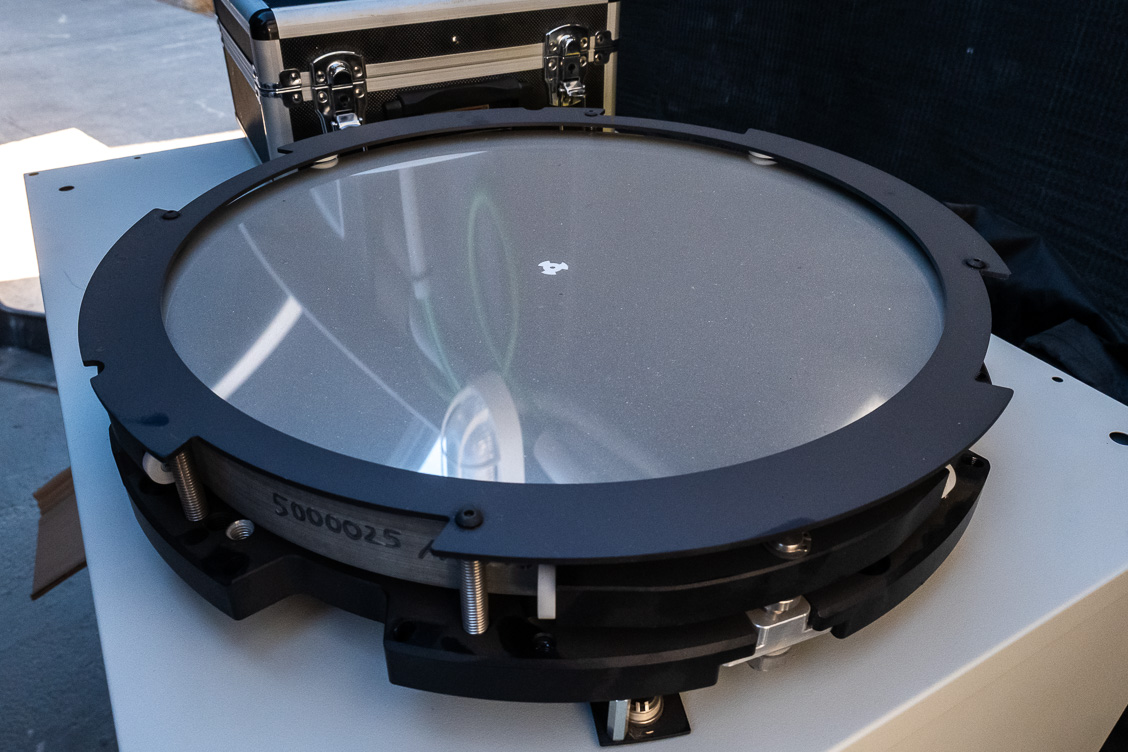
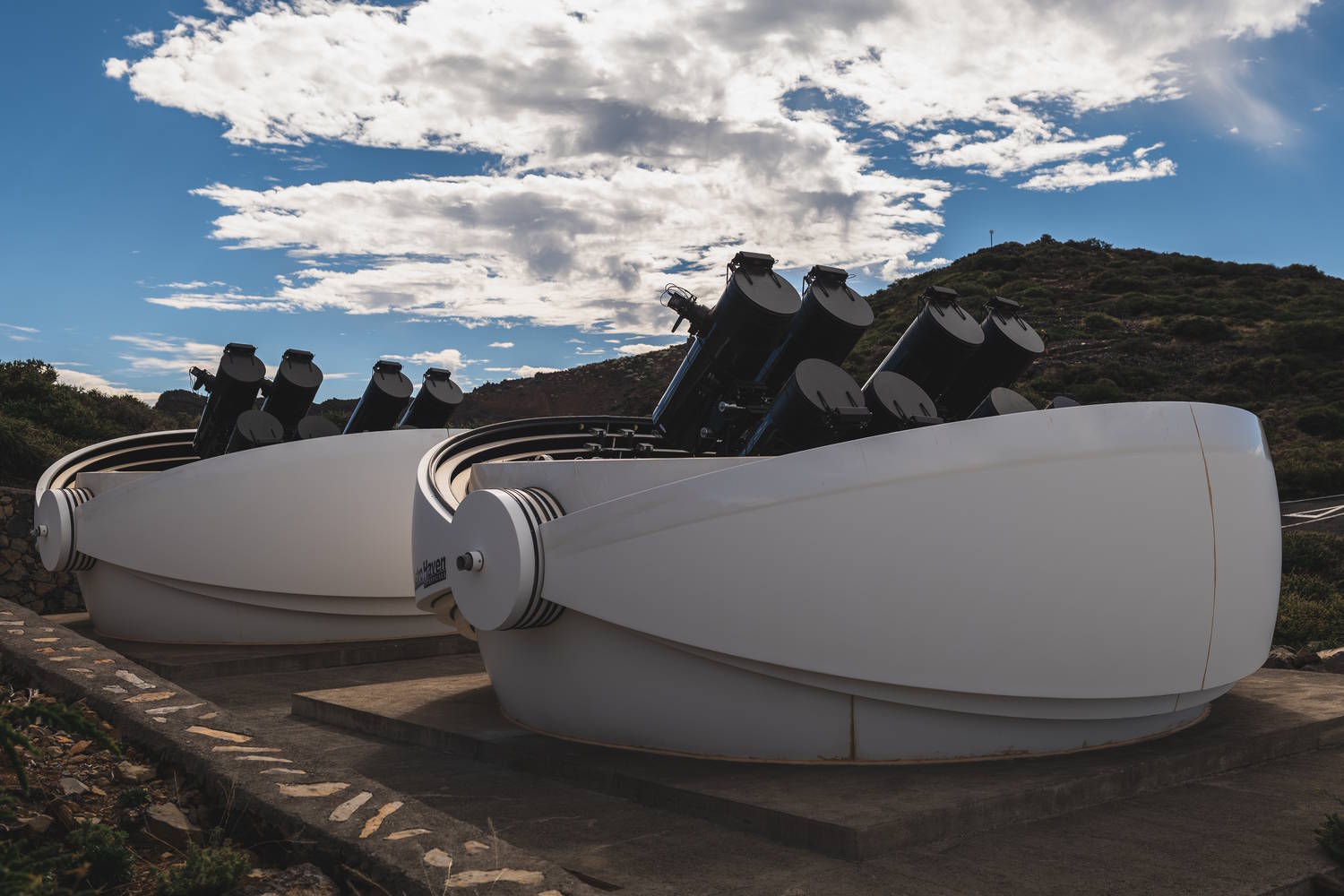
This led to the decision to fully clean the GOTO-North mirrors, for the first time since the system was installed. With 16 telescopes per site and two mirrors per telescope there’s a lot of work to be done!
Cleaning GOTO’s Primary Mirrors
As in most telescopes, the primary mirrors of GOTO are first surface
mirrors, which means that the reflective coating is applied on the front of the glass substrate rather than behind it. This is great for optical quality, but also makes the surface a lot more delicate. We need to take great care when cleaning the mirrors to not scratch this coating, and we also need to avoid leaving behind any residue from the cleaning products.
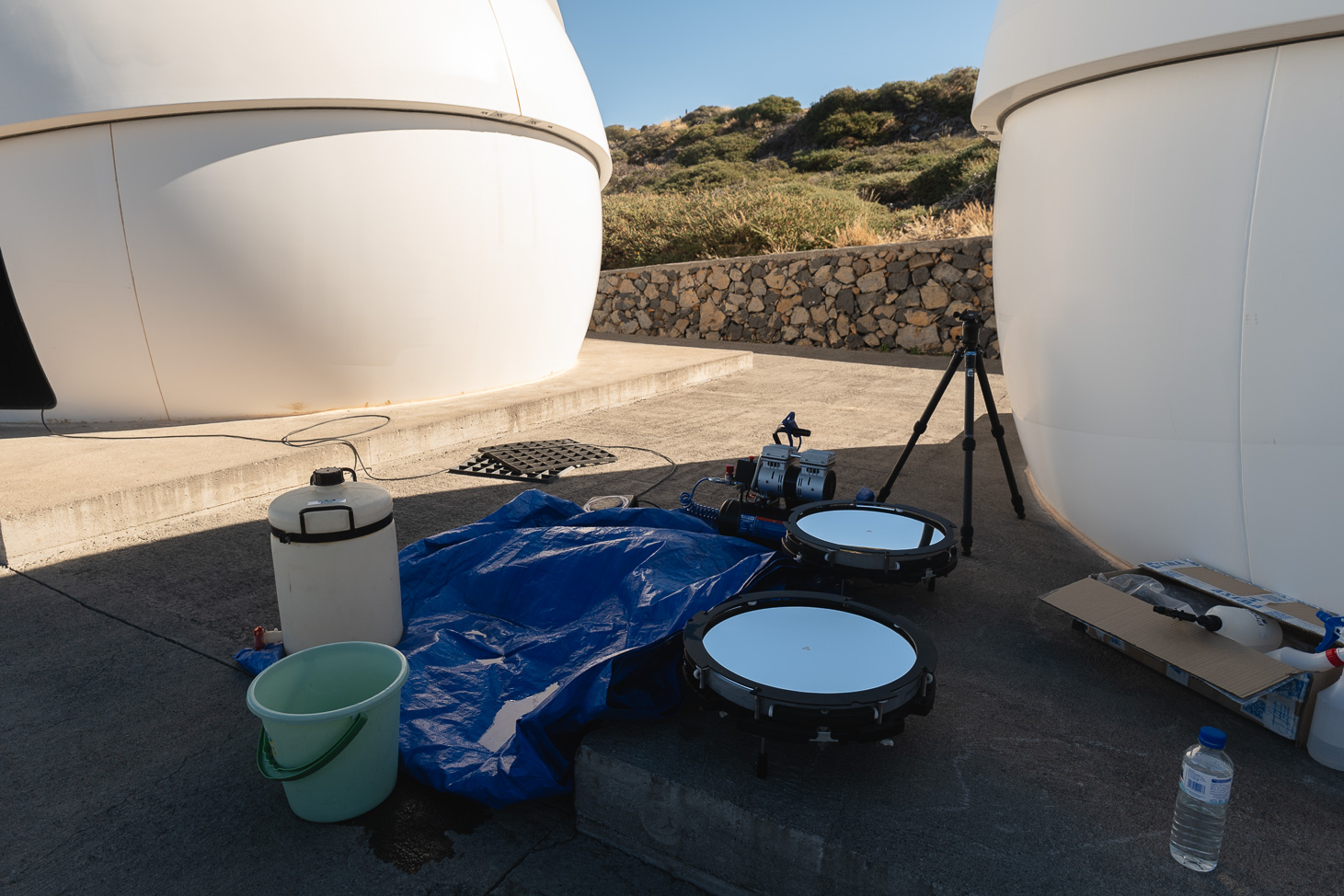
With so many mirrors to clean we needed to be fairly methodical. We set up a work area outside the telescope domes, shaded from the sun, with a plastic sheet to avoid any contaminants from the ground.
The first step was blowing away light dust using compressed air. This is where the plastic sheet was really important, as otherwise the stream of compressed air could have kicked up dust and ash from the ground back up onto the mirrors. This step also required some care, we didn’t want to try and remove any larger or heavier particles from the mirror at this point as they could drag across the surface and cause scratches.
The next step was drenching the mirrors with distilled water. Using distilled water is key to avoid deposits of minerals that would be left by ordinary tap water. Spraying the mirrors and allowing the water to bead and run off carried away the vast majority of the dust left sitting on the surface. Once the mirror was completely wet we used a small amount of dilute sodium lauryl sulphate as a detergent/surfactant to carry away any oil-based debris. We had some cloths soaked in SLS solution which we squeezed over the mirrors, not making direct contact with the surface. This was then rinsed off with more distilled water.
Finally we needed to forcibly dry the mirrors. Leaving the water to evaporate naturally would almost certainly leave a residue. For most of the mirrors this was done using compressed air to blow off the water, but for a few of the mirrors with more stubborn dirt we first used a spray of alcohol to force off the water.
Once the mirrors were clean and dry we measured their reflectivity, took photographs of their surfaces, and then remounted them to the telescope optical tubes. GOTO uses an f/2.4 hyperbolic newtonian design which is very sensitive to the collimation of the mirrors, so we then had to adjust their collimation overnight while stars were visible. This is an iterative procedure, taking pictures of the night sky, examining the star shapes, making small adjustments to the angle of the primary mirror, and then repeating the process until the image quality is acceptable and even across the whole field.